Precision Boresight Alignment System for Aircraft and Naval Ships
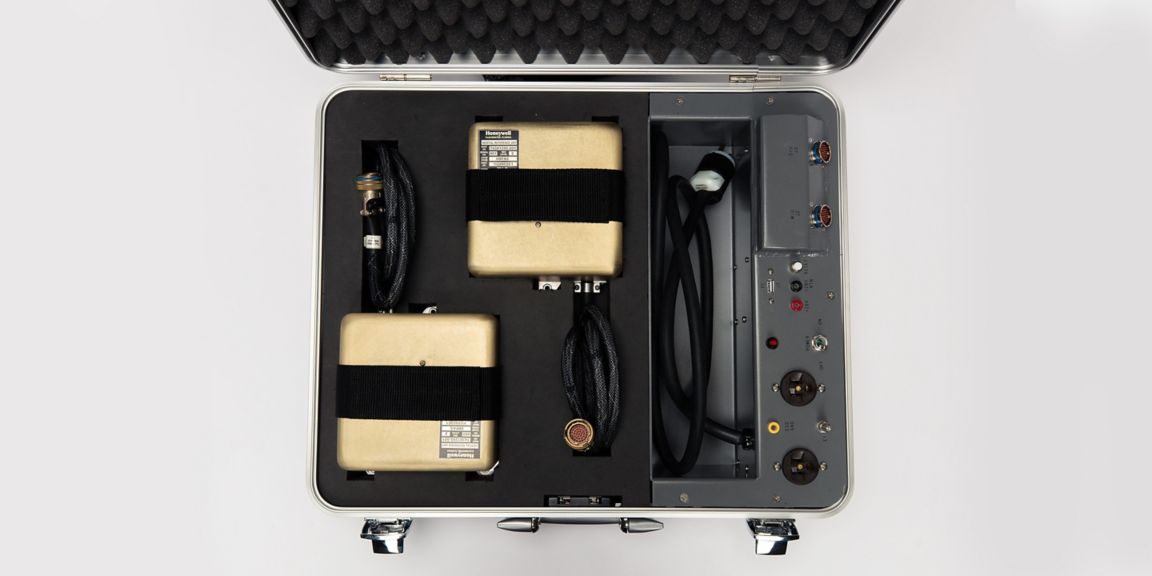
Honeywell’s precision boresight alignment system (PBAS) is a non-optical, gyro-stabilized, computerized system that utilizes navigation-grade inertial technology to capture and calculate boresight alignment corrections with an intuitive, step-by-step guided software that automates all calculations, and provides customized software outputs to match our customers’ requirements. Boresight alignment is designed to ensure the proper performance of precision equipment across different industries. Depending on the application or platform, the process can be lengthy and expensive, usually having to perform cumbersome equipment setup, data gathering and post processing which can cause disruptions in aerospace or naval ship operations. For commercial or defense original equipment manufacturers or maintenance providers that need higher accuracy to align munitions, navigation, radar and sight systems, Honeywell’s precision boresight alignment system (PBAS) step-by-step guided software reduces the need for expert training and job completion time by 50%. We do this by removing the need for periodic calibrations, line of sight, jacking or leveling. As a result, this dramatically decreases maintenance costs and downtime while providing customers with a solution they can trust backed by Honeywell’s century of experience engineering high-performance navigation solutions. For shipbuilders, surveyors or maintenance providers that need higher accuracy to align munitions, navigation, radar and sight systems, Honeywell’s precision boresight alignment system (PBAS) using step-by-step guided software reduces the need for expert training and cuts job completion time by 50%. We do this by removing the need for line of sight as well as eliminating the need for dry docking by compensating for vessel motion and working without leveling while providing customers with a solution they can trust backed by Honeywell’s century of experience engineering high-performance inertial solutions. PBAS is ideal for naval applications where technicians operate in space-constrained areas because it reduces errors caused by motion, equipment setup time like instrument leveling, measurement time and associated costs by almost 50%, depending on the application.
Boresight alignment is designed to ensure the proper performance of precision equipment across different industries. Depending on the application or platform, the process can be lengthy and expensive, usually having to perform cumbersome equipment setup, data gathering and post processing which can cause disruptions in aerospace or naval ship operations.
For commercial or defense original equipment manufacturers or maintenance providers that need higher accuracy to align munitions, navigation, radar and sight systems, Honeywell’s precision boresight alignment system (PBAS) step-by-step guided software reduces the need for expert training and job completion time by 50%. We do this by removing the need for periodic calibrations, line of sight, jacking or leveling. As a result, this dramatically decreases maintenance costs and downtime while providing customers with a solution they can trust backed by Honeywell’s century of experience engineering high-performance navigation solutions.
For shipbuilders, surveyors or maintenance providers that need higher accuracy to align munitions, navigation, radar and sight systems, Honeywell’s precision boresight alignment system (PBAS) using step-by-step guided software reduces the need for expert training and cuts job completion time by 50%. We do this by removing the need for line of sight as well as eliminating the need for dry docking by compensating for vessel motion and working without leveling while providing customers with a solution they can trust backed by Honeywell’s century of experience engineering high-performance inertial solutions. PBAS is ideal for naval applications where technicians operate in space-constrained areas because it reduces errors caused by motion, equipment setup time like instrument leveling, measurement time and associated costs by almost 50%, depending on the application.
Downloads
Specifications
| Physical: Weight | 3.0 Kg, 6.7 lbs |
Tell us your accuracy, environment, and integration requirements and we'll recommend the right board and correction approach.